 Dice Trail
Better decisions, one game at a time.
Dice Trail
Better decisions, one game at a time.
For people who know and regularly play base-game Wingspan. A downloadable 14-page PDF for making better birdfeeder decisions.
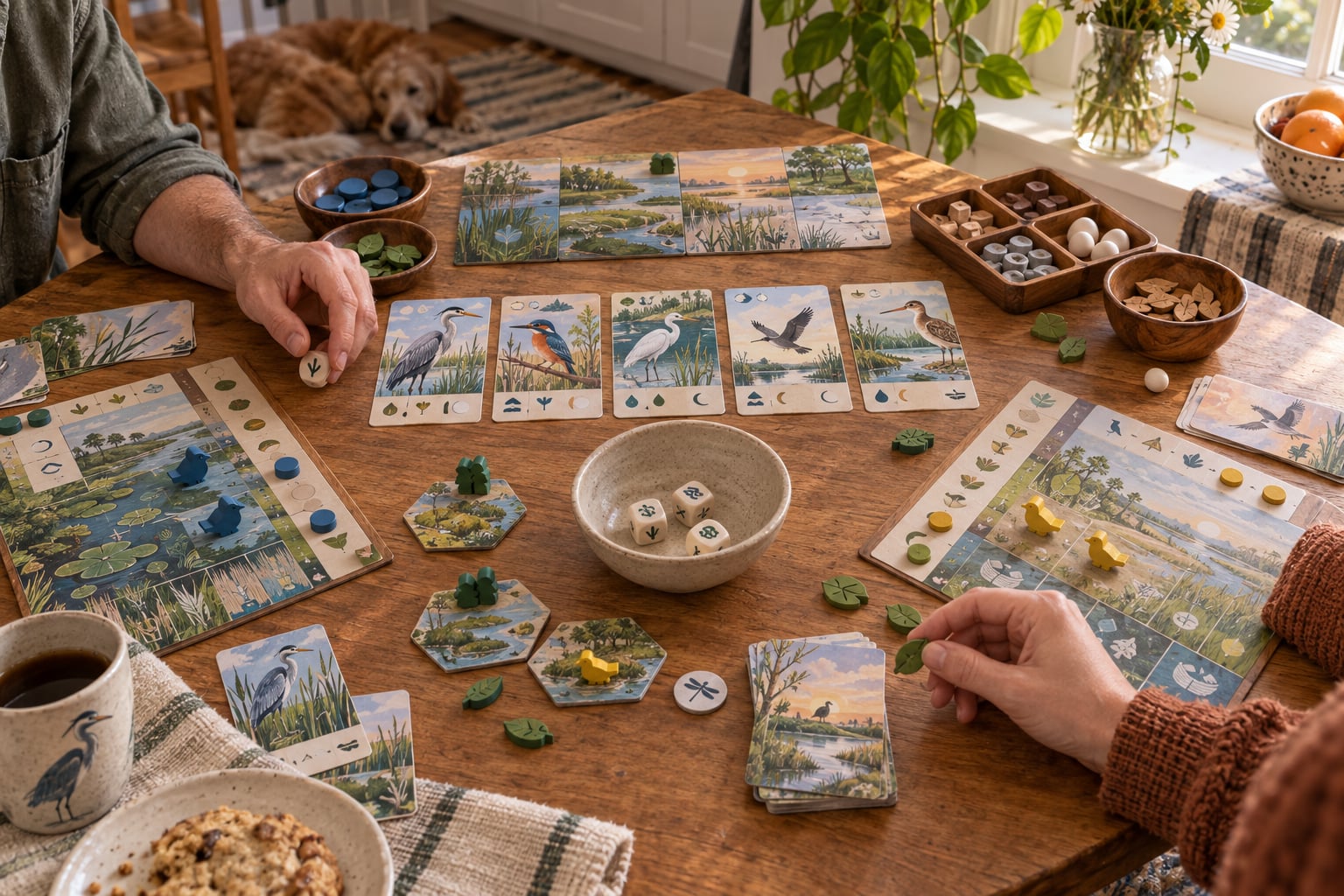
You take the most useful-looking die, then notice what you left for the next player. Or you reset the feeder hoping for one food type, even though the result is uncertain. Those choices are easy to miss when you focus only on what you can take right now.
Start with your next bird, reassess after each die, and weigh what a food action gains against what it leaves behind.
Use your next playable bird to decide what food is worth taking, rather than choosing the largest-looking pile.
Take dice one at a time and reassess the food that remains before your next pick.
Weigh a reset against its uncertain result instead of counting on a particular food type.
Consider what the next player can use before you settle on a pick.
Return to the guide's food, reset, and next-player decisions before another game.
The guide has nine sections. Rule 1 and Rule 2 are shown in full below, so you can judge whether the advice fits your games before buying.
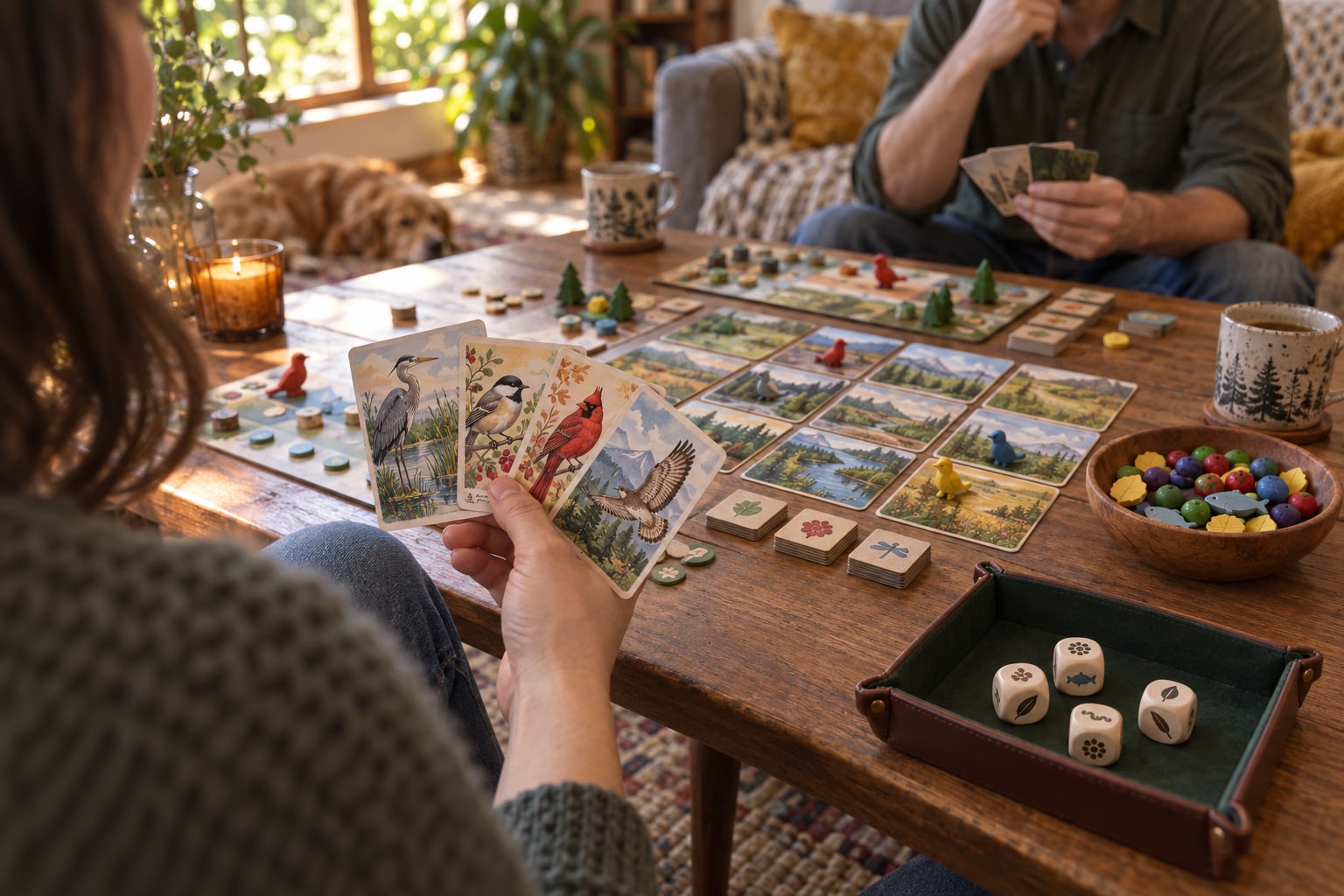
The feeder may offer several tempting faces. One of them might turn a card in your hand into a bird you can play on your next turn; another just increases the food supply beside your mat. Start with the card. Count its printed food cost against the tokens you already hold, then check whether the slot where you would play it needs eggs. The most useful food is often the token that closes the actual gap, not the face you have seen least often.
A flexible food cost changes that comparison. If the bird accepts either of two foods, a face that looks scarce in the feeder need not be scarce for this play when the other acceptable token is already in your supply. Conversely, a fish that completes Brown Pelican's two-fish cost has a clear destination. Spend time on the bottleneck, not on collecting an attractive assortment. You can also pay two other food tokens as one needed food when playing a bird, but check whether that exchange is worth using both rather than assuming every spare is interchangeable at no cost.
| Candidate pick | Bird it enables | Other food already held | Action it saves |
|---|---|---|---|
| Exact missing cost | Brown Pelican after the second fish | One fish | Another food-gain turn if eggs are ready |
| Flexible cost alternative | A bird in your hand accepting either visible type | The other accepted type, if any | A further search for one exact face |
| Speculative surplus | No bird ready to play with it | Enough for your current target | None yet |
Your target bird gives the picks a purpose. But on a forest action that actually grants two dice, you do not need to lock in both at the start. The publisher's FAQ says to choose one at a time. Removing one die can turn a mixed feeder into a set whose remaining dice all show the same face, opening an optional reroll before the next food pick. It can also leave the exact food you wanted plainly available. Look down after each removal instead of remembering the feeder as it looked when you started.
The combined invertebrate/seed face is a choice of one food token, not two. Taking that die to gain seed also removes the option of taking invertebrate from it later. This matters even when neither food is your first priority: which die goes back outside the feeder changes the options the next picker sees. If your action grants one die, there is no second choice to sequence. If your forest slot offers an extra die only for discarding a card, count that payment before imagining a two-pick action.
Shown here: Rule 1 and Rule 2. The PDF also includes the short version, reset decisions, next-player checks, when food can wait, a next-game section, a quick reference, and sources.
Choose food for a bird you can play, so your pick supports a next turn instead of just adding to your supply.
Recheck the feeder after each die, since the choice in front of you may have changed.
Look at what the next player can use, not only at what your pick gains you.
Consider another productive action when taking food helps a rival more than it helps you.
The 14-page PDF covers food for your next bird, picks made one die at a time, uncertain resets, the next player's options, and when to take another action. It also includes a next-game section, a quick reference, and sources.
$3.97
Get the guide14-page PDF · no subscription · works on any device
Without a plan, it is easy to keep choosing from the feeder as though the next player will not use what remains.