 Dice Trail
Better decisions, one game at a time.
Dice Trail
Better decisions, one game at a time.
For Wingspan players who know the rules but want a clearer plan for their turns. A downloadable 15-page PDF.
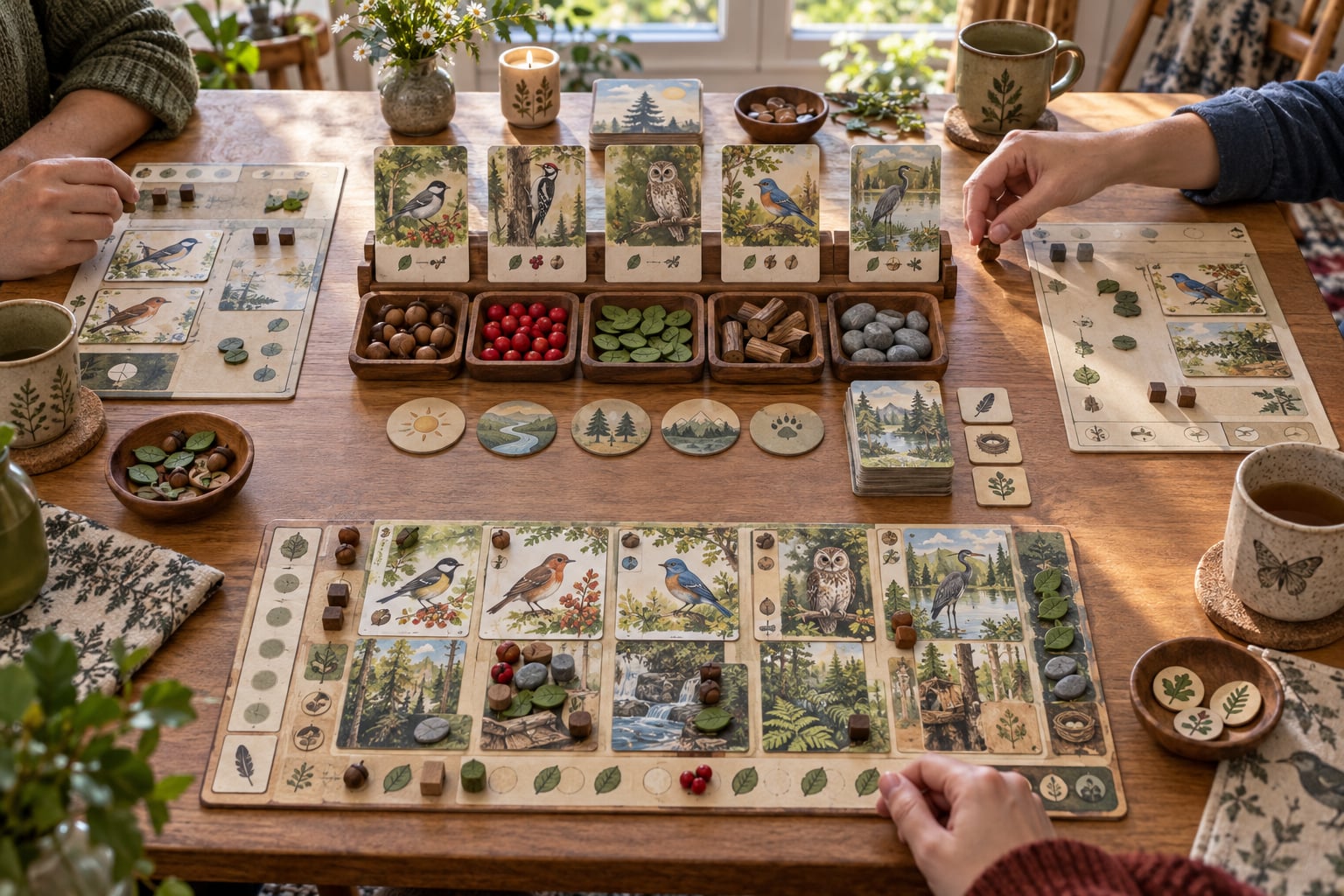
You need food, cards and eggs, so you keep switching rows. Each turn gets you something, but no habitat becomes worth repeating. The hard part is deciding which bird actually saves you an action elsewhere.
Choose a row, count the actions an off-habitat power saves, then decide when to build, activate or score.
Pick the habitat you want to repeat before judging which resource power belongs in your plan.
Value an off-habitat power only when its output can replace a separate weak action.
Compare an engine bird's setup cost with the activations you have left.
Check that food, cards, eggs and capacity let you use the row again.
Keep the guide's decisions close when you plan your next game.
The guide has nine sections. Rule 1 and Rule 2 are shown in full below so you can judge whether this approach fits your play before buying.
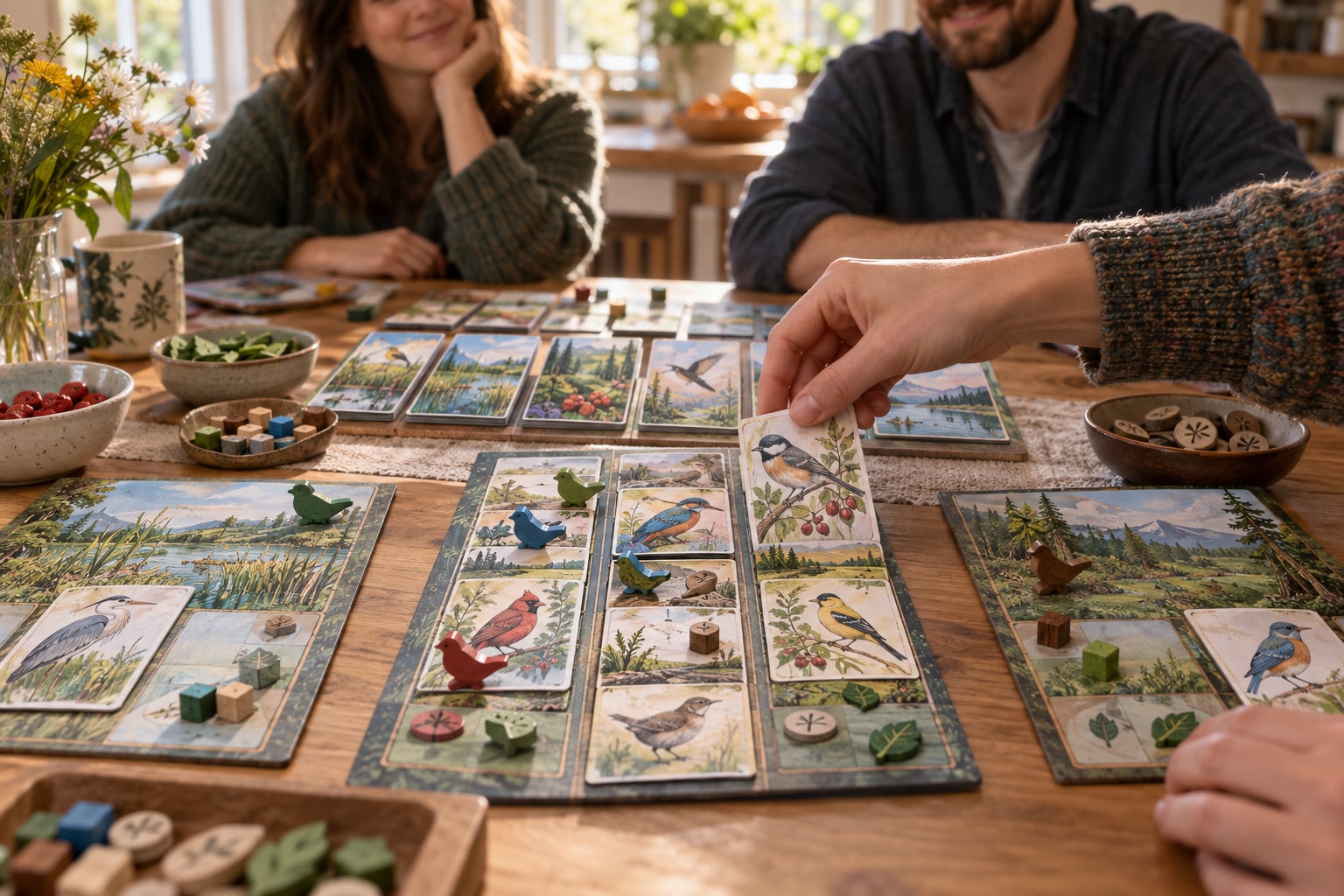
A row gets better in two ways at once: playing birds exposes a stronger printed action, and every useful brown power in that habitat can fire on the same activation. That makes concentration valuable, but it does not make any habitat automatically best. Choose from the tableau in front of you: useful output now, resources your planned birds need, and how often you can honestly return to the row.
The second job matters only after the first one is sound. Eggs gained during a food action help if food is already worth taking and those eggs remove a future grassland visit. A weak forest does not become your main row merely because one bird lays an egg there.
| Habitat | Current printed yield | Repeatable powers | Needed second resource | Future activations | Main row verdict |
|---|---|---|---|---|---|
| Forest | Food you can spend soon | Egg power | Eggs for later columns | 4 | Strong if food demand remains |
| Grassland | Eggs with open capacity | None yet | Cards | 2 | Support row for now |
| Wetland | One useful draw | None | Food | 1 | Keep deliberately thin |
Extra resources are pleasant. Saved actions are better. Action compression means one activation advances two needs far enough that a second habitat action leaves your plan. Compare the net secondary output, after any discard or payment, with what your weak row would produce. Then ask whether the output crosses a threshold you actually need.
One card in hand when you need any playable bird can matter more than three cards when your hand is already good. Likewise, an egg that completes a column payment can remove a grassland action; an egg with no purpose merely joins the collection. Keep points and round-goal value visible, but separate from the resource test so a shiny score does not hide a missing input.
| Question | Main row activation | Separate weak action | Verdict |
|---|---|---|---|
| Primary useful output | Record normal row yield | Record what you give up | Does the main row still advance the plan? |
| Net secondary output | Subtract discards or payments | Record weak-row yield | Is the comparison honest? |
| Threshold crossed | Name the exact card, egg or food need | Name what the weak action would complete | Does the next play become possible? |
| Scoring effect | Note points or goal progress | Note points or goal progress | Keep scoring separate from resources |
| Action removed | Name the habitat visit that disappears | Leave it in the plan if still needed | Saved or merely extra? |
You have read Rule 1, Choose the row first, and Rule 2, Count actions saved. The PDF also covers the short version, payback timing, bottlenecks, when to stop building, common mistakes, what to try next game and a quick reference.
Concentrate play in one row when an off-habitat power can cover a resource you would otherwise collect separately.
Judge setup costs against the activations left, rather than assuming more engine is always better.
Watch the resources and capacity it needs before committing another turn to the engine.
Stop adding engine pieces when activating or scoring now is worth more than their future output.
The 15-page PDF covers row choice, actions saved, payback timing, bottlenecks and when to stop building. It also includes common mistakes, a next-game section and a quick reference.
$3.97
Build your plan15-page PDF · no subscription · works on any device
Without a way to count the actions a bird saves, it is easy to keep spreading your turns across rows that never become worth repeating.