 Dice Trail
Better decisions, one game at a time.
Dice Trail
Better decisions, one game at a time.
For Wingspan base-game players who know the rules but keep adding birds too late. A downloadable 14-page PDF for making your round-four choices.
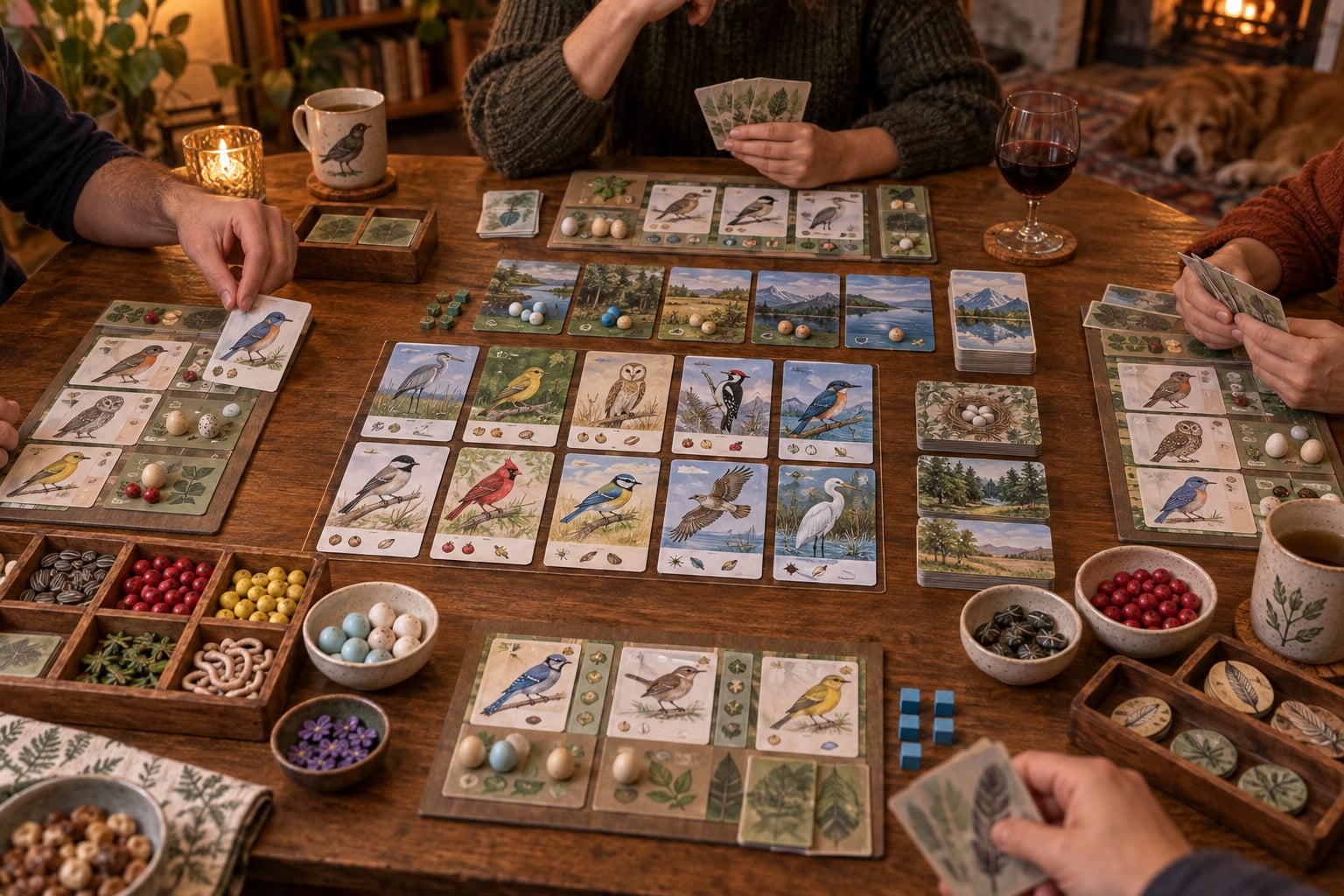
A bird can look useful even when there are too few actions left to use its ability. If you count only the bird’s points, you miss what playing it costs: the action and resources that could have scored another way. Without that comparison, it is hard to tell when building has stopped paying off.
Count the actions left, compare complete lines by net points, then revisit the choice when relevant information changes.
Start each comparison with the actions you have left, so a late engine gets credit only for time it can use.
Compare complete lines using points gained, their costs, and the points each line displaces.
Check whether setup and its later payoff beat using both actions on your best available scoring line.
Use your best repeatable activation as the score another line must beat.
Return to the guide’s decision rules when you need to compare your next actions.
The guide has 10 sections. The first two rule chapters are shown in full here, so you can judge whether the approach fits your game before buying.

Round four starts with five cubes because each earlier round goal has claimed one. Once the round is under way, the useful number is smaller: the unspent cubes in front of you. Each cube buys one action, so a plan that needs gain food, play a bird, then activate its habitat is a three-action plan, even if your attention is fixed on the bird.
Write candidate lines as ordered sequences of equal length. That prevents the familiar comparison between one impressive bird play and one ordinary habitat activation when the bird actually needs setup first. A payoff beyond your final cube is not late. It is unavailable.
Once the sequences fit the cubes, score the sequence rather than the final move. Net points means the change in your final score caused by that complete line. Food and cards are useful, but they are not points by themselves. Eggs, tucked cards, cached food, printed bird values, bonus-card thresholds and the round goal can score. Count each only when this particular line changes it.
Keep certain gains separate from conditional ones. A face-up card has known features; a blind draw does not. A predator attempt may miss. Give uncertain gains a range instead of slipping a friendly average into the total. Then subtract scored resources spent and the points your chosen line displaces.
| Candidate line | Actions used | Certain points gained | Points spent or displaced | Conditional points | Net range |
|---|---|---|---|---|---|
| Run the scoring habitat | Same as comparison | Eggs, tucks, caches now | Fuel spent or overflow | Predator or draw result | Certain total to best case |
| Play the target bird through setup | Same as comparison | Printed value and known changes | Placement eggs and missed activations | Unknown follow-up | Certain total to best case |
| Take a goal or bonus line | Same as comparison | Exact threshold or rank change | Baseline actions given up | Opponent-dependent swing | Certain total to best case |
A quick ledger can sit on scrap paper. Add only changes caused by the line. If both options earn the same round-goal result, that row is zero for both. If three food remain unused at game end, they are zero. If spending an egg to play a bird removes one end-game point, write minus one even though paying the egg feels routine.
You’ve read Rule 1 and Rule 2, the first two rule chapters in the 10-section guide. The remaining sections cover setup payoffs, late bird value, engine baselines, recalculation, common mistakes, and a quick reference.
Judge a late bird by what it scores now, including what you give up to play it.
Compare the setup action and its payoff with the scoring line those actions could replace.
Keep your comparison provisional, then recalculate when shared information changes a relevant input.
The 14-page PDF covers an actions-left count, a net points ledger, tests for setup and late birds, an engine baseline, common mistakes, and a quick reference.
$3.97
Get the guide14-page PDF · no subscription · works on any device
Keep adding birds without comparing complete lines, and you may keep passing up points your engine could score now.